Most ghee today is made by separating cream from milk in a machine and heating it. The Bilona method is older and slower. It starts with curd, not cream, and it is the way our cow ghee is made.
What Bilona means
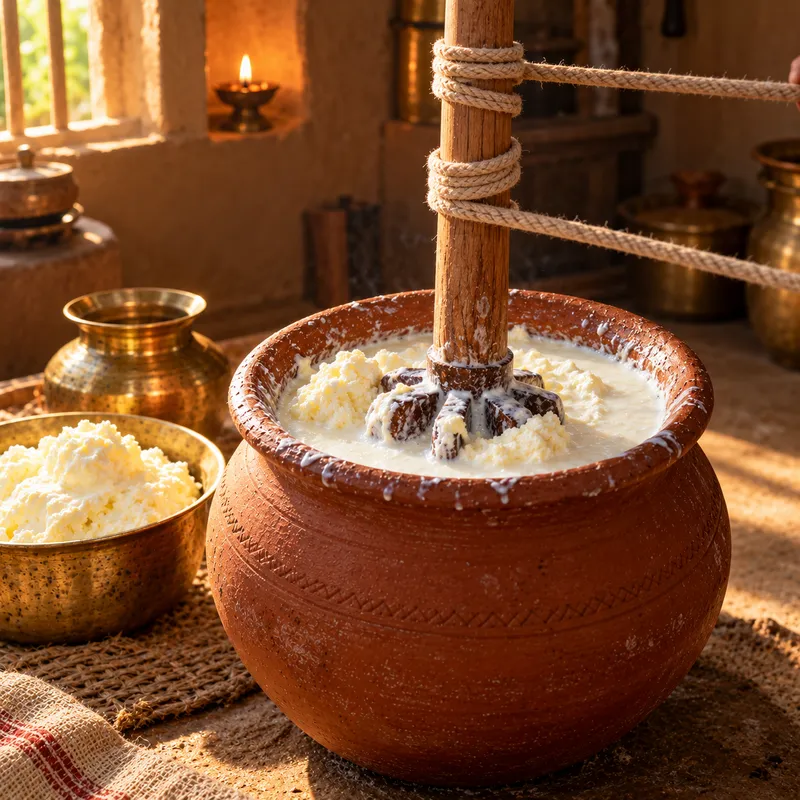
Bilona is the wooden churn, also called a madhani, that is turned back and forth by hand with a rope. Over time the name of the tool became the name of the whole method.
The four steps
- The milk is boiled and cooled. Fresh milk is brought to a boil and left to cool.
- It is set into curd overnight. A little curd is stirred in and the milk rests until morning.
- The curd is hand-churned. The wooden churn is worked both ways until the makhan, white butter, separates from the buttermilk.
- The makhan is slow-cooked. It simmers on a low flame until it turns clear and golden and the kitchen smells of ghee.
Nothing is rushed. The curd decides when it is ready, not the clock.
Why it is made in small batches
Every step is done by hand and every step needs watching. Curd has to set, the churning takes time, and the makhan must cook slowly or it will catch. That is why Bilona ghee is made a little at a time.
What you notice in the jar
- A rich aroma as soon as the lid comes off
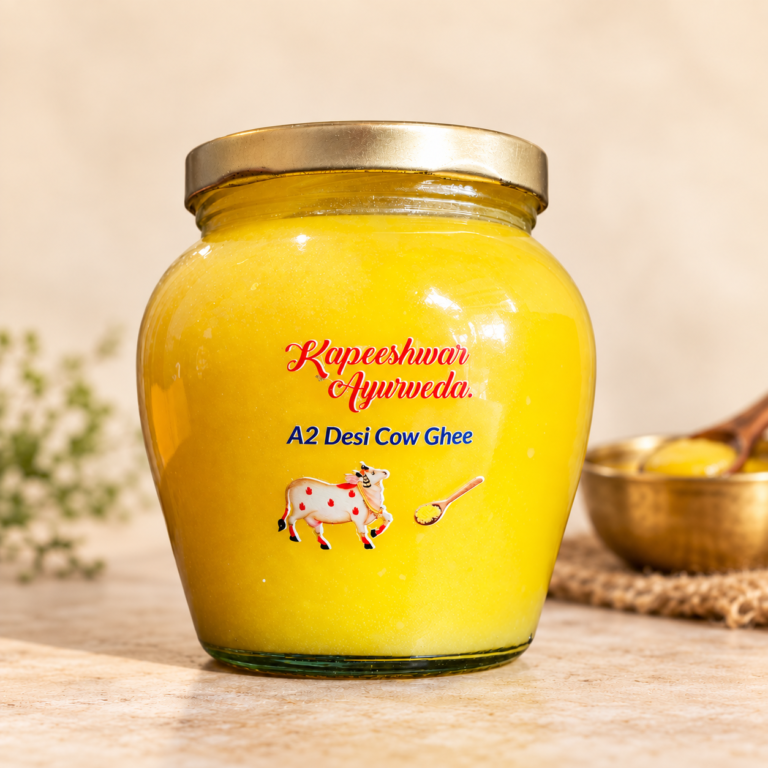
- Golden grains instead of a smooth, waxy block
- A taste many people remember from the ghee made at home
Tip: Warm a spoonful over hot rice or dal. Heat brings out the aroma better than anything else.
 Know Your Ghee
 Know Your Ghee
 Know Your Ghee